May 25, 2026 Bhagyashree Samal
Short form video continues to dominate the digital marketing landscape, and YouTube Shorts has become one of the most powerful tools for creators, brands, and businesses looking to expand their reach organically.
Yet many creators publish Shorts consistently and still struggle to cross a few hundred views. Others seem to attract thousands—or even millions—of views with relatively simple videos.
So what separates successful Shorts from the ones that disappear unnoticed?
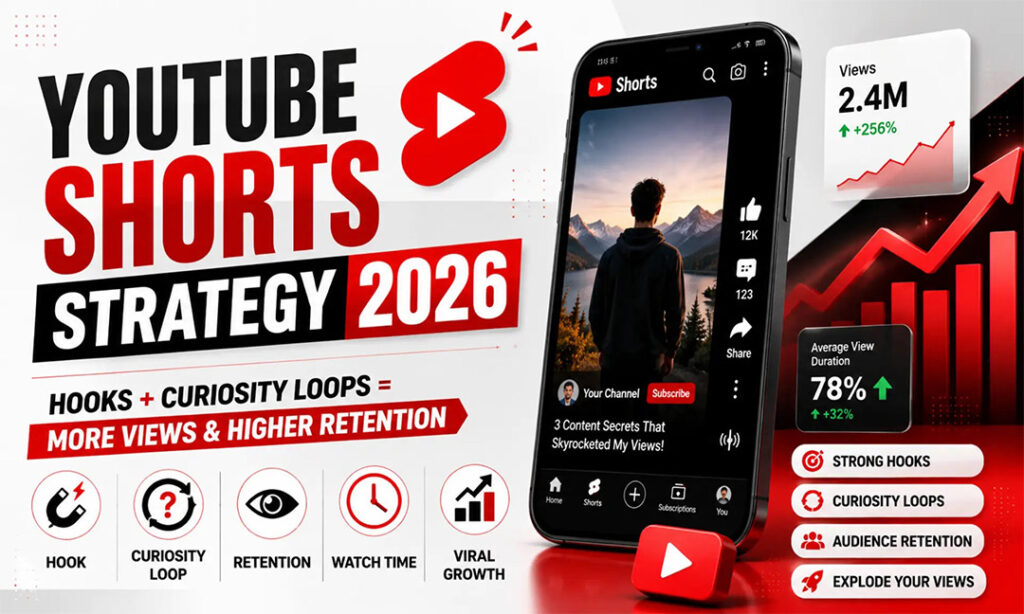
Recent insights from YouTube Shorts experts suggest that the answer has less to do with production quality and more to do with viewer psychology. Specifically, how effectively a video captures attention, creates curiosity, and maintains watch time.
Understanding these principles can help creators, entrepreneurs, and businesses build stronger content strategies in 2026.
Many marketers still focus primarily on likes, comments, and shares when evaluating video performance.
While engagement remains important, YouTube Shorts increasingly rewards videos that keep viewers watching.
When users remain engaged throughout a video instead of immediately swiping away, YouTube receives a strong signal that the content is valuable. As a result, the platform is more likely to distribute that video to larger audiences.
This shift means creators should spend less time thinking about what they want to say and more time thinking about what will keep viewers interested.
At FluxCanvas, we’ve noticed that videos with a strong opening and clear narrative structure often outperform highly polished videos that fail to create curiosity during the first few seconds.
Many businesses treat Shorts like traditional advertisements.
The video starts with:
The problem is that viewers rarely open the Shorts feed looking for advertisements.
They want entertainment, useful information, inspiration, or solutions.
When a video feels promotional from the start, viewers often swipe away before reaching the main message.
Instead of leading with a sales pitch, successful creators focus on delivering value first.
A useful tip, surprising insight, relatable problem, or entertaining scenario creates far more engagement than a direct promotion.
Businesses that understand this shift are often able to build trust and visibility without significantly increasing advertising budgets.
One of the most effective techniques emerging in YouTube Shorts is the use of curiosity loops.
A curiosity loop begins when a creator introduces an unanswered question or unexpected situation.
The viewer naturally wants to know what happens next, so they continue watching.
For example:
Instead of saying:
“Here are three YouTube growth tips.”
A creator might say:
“I discovered one mistake that was quietly killing my YouTube growth.”
The viewer immediately wants to know:
This simple shift dramatically increases retention because the brain naturally seeks closure.
For businesses using video marketing, curiosity loops can transform educational content into content that people actually watch until the end.
Another interesting trend is the move toward simpler storytelling.
Many creators try to fit too much information into one Short.
The result is often confusing and difficult to follow.
The most effective Shorts generally follow a straightforward structure:
For example:
Problem: Website visitors weren’t converting into leads.
Solution: A landing page headline was rewritten.
Result: Conversion rates increased significantly.
This format works because it creates immediate clarity.
The viewer understands the challenge, follows the process, and receives a satisfying outcome.
Businesses can use the same structure to showcase customer success stories, marketing campaigns, product demonstrations, and educational content.
Most creators focus on visuals and voiceovers.
However, text hooks are becoming increasingly important.
A strong text hook instantly tells viewers why they should continue watching.
Examples include:
These short phrases create context before the creator even speaks.
For brands and businesses, text hooks can significantly improve retention because they quickly establish relevance and curiosity.
One of the smartest strategies for content creation is studying successful videos and identifying why they work.
This doesn’t mean copying content.
It means understanding the structure behind the success.
For example:
A viral video may begin with:
“Top 3 businesses with the lowest failure rate.”
A marketing-focused creator could adapt the same structure:
“Top 3 digital marketing skills with the highest income potential.”
The topic changes, but the psychological trigger remains the same.
This approach allows businesses to stay creative while benefiting from proven audience behavior patterns.
Many creators automatically end every video with:
While these calls-to-action were once considered standard practice, many experts now believe they can interrupt the viewer experience.
When a story reaches its natural conclusion, adding an unrelated engagement request may weaken the emotional payoff.
Instead, creators are increasingly focusing on delivering a strong ending.
That ending might be:
When viewers feel satisfied, engagement often happens naturally.
For businesses, the opportunity is significant.
Short-form video is no longer reserved for influencers and entertainment creators.
Educational institutions, startups, service providers, local businesses, and professional brands can all benefit from strategic YouTube Shorts content.
The key is understanding that modern audiences respond to stories, curiosity, and value not sales messages.
Organizations that consistently publish engaging short-form content often experience improvements in:
As digital marketing continues to evolve, businesses that adapt their content strategy to audience behavior will have a clear competitive advantage.
The future of YouTube Shorts isn’t about creating better advertisements.
It’s about creating content that captures attention, sparks curiosity, and delivers value quickly.
The most successful creators and brands in 2026 are likely to be those who understand how viewers think and structure their content accordingly.
Strong hooks, curiosity-driven storytelling, simple narratives, and audience-focused content are becoming the foundation of successful short-form video marketing.
For businesses looking to strengthen their digital presence, mastering these principles can create opportunities for sustainable organic growth while building meaningful connections with their audience.
A curiosity loop is a storytelling technique that creates an unanswered question or intriguing situation at the beginning of a video and reveals the answer later. This encourages viewers to continue watching, improving audience retention and watch time.
Hooks capture viewers’ attention within the first few seconds of a video. A strong hook prevents users from swiping away and increases the chances of higher watch time, which is a key ranking factor in the YouTube Shorts algorithm.
While YouTube Shorts can be up to 60 seconds, the ideal length depends on the content. The most successful Shorts often deliver value quickly, maintain viewer interest throughout the video, and avoid unnecessary introductions.
Watch time and audience retention are considered more important ranking signals than likes and comments. Videos that keep viewers watching until the end are more likely to receive additional impressions and reach larger audiences.
Yes. Businesses can use YouTube Shorts to increase brand awareness, educate potential customers, showcase products or services, and build trust with their audience. The most effective business Shorts focus on providing value rather than direct promotion.
Content that combines strong hooks, curiosity-driven storytelling, relatable problems, practical solutions, and clear outcomes tends to perform best. Educational content, behind-the-scenes videos, quick tips, and customer success stories remain highly effective.
Yes. Text hooks help establish context and create curiosity before viewers even hear the audio. A compelling on-screen text statement can significantly improve viewer retention and engagement.
Consistency is more important than volume. Most creators and businesses benefit from posting several Shorts per week while focusing on content quality, audience relevance, and retention optimization.